Generic vs Brand-Name Prescriptions
Generic drugs contain the same active ingredient, in the same dose and form, as their brand-name counterparts. By law, they must perform the same way in your body. So why do people still hesitate to switch, and are there cases where brand-name genuinely matters? Here is the full picture.
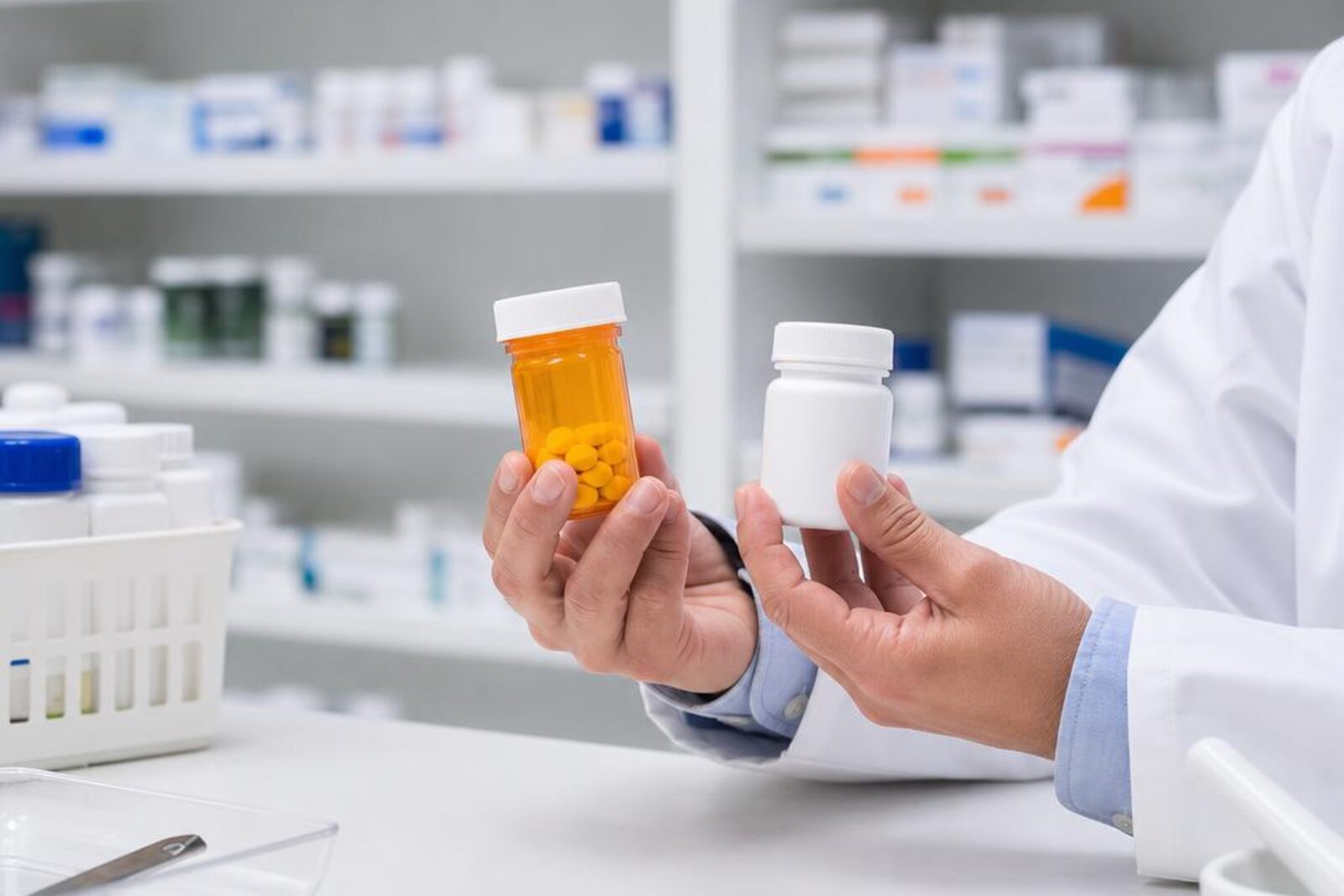
Somewhere along the way, "generic" picked up a reputation for being the lesser option — a watered-down version of the "real" medication. That reputation is not supported by the pharmacology. The FDA requires a generic drug to contain the identical active ingredient, in the identical strength, dosage form, and route of administration, as the brand-name drug it copies. It is not a similar drug. It is the same drug, made by a different manufacturer once patent protection expires.
What "bioequivalent" actually means
Before a generic can be sold, the manufacturer must prove to the FDA that it is bioequivalent to the brand-name drug — meaning it delivers the same amount of active ingredient into your bloodstream, at essentially the same rate, as the original. The FDA's standard allows for only a narrow variance (in practice, usually within a few percentage points), which is well within the natural variation you would see between two doses of the exact same brand-name pill on two different days. In plain terms: your body cannot reliably tell the difference.
Generic vs brand-name, side by side

| Factor | Generic | Brand-name |
|---|---|---|
| Active ingredient | Identical | Original formulation |
| Dose & strength | Identical | Identical |
| FDA approval standard | Bioequivalence to the brand | Original safety & efficacy trials |
| Inactive ingredients (fillers, dyes, coatings) | Can differ | Original formula |
| Appearance (color, shape) | Often different by law (trademark) | Original look |
| Typical cost | 30–80% less | Higher list price |
| Available immediately after approval | Only after patent/exclusivity expires | Yes |
What can actually differ — and why it rarely matters
Generics are permitted to use different inactive ingredients: the fillers, binders, dyes, and coatings that make up the rest of the pill. This is why a generic tablet might be a different color or shape than the brand-name version — trademark law actually requires generics to look different. For the overwhelming majority of patients, these inactive ingredients have no meaningful effect. The exceptions worth knowing:
- Allergies to specific fillers or dyes. Rare, but possible. If you notice a new reaction after switching manufacturers, tell your provider.
- Narrow therapeutic index drugs. A small number of medications (certain thyroid, seizure, and blood-thinning drugs) have such a tight window between effective and harmful dose that some providers prefer to keep patients on one consistent formulation, generic or brand, rather than switching manufacturers repeatedly.
- Extended-release formulations. The release mechanism has to be proven equivalent too, and occasionally patients report a different subjective experience — worth flagging to your provider rather than assuming it is in your head.
Ready when you are
See if you're a candidate for online care
A licensed provider reviews your information and lets you know your options — no obligation to continue.
Start an online visitWhy brand-name isn't automatically "better"
Brand-name manufacturers spend heavily on marketing, and that cost is reflected in the price, not necessarily in the medicine. Once a generic is FDA-approved as bioequivalent, choosing brand-name over generic is rarely a clinical decision — it is usually a preference, a habit, or in some cases simply not knowing a generic exists yet. The one legitimate reason to stay on brand-name is if a specific medication has no approved generic yet, which is common for newer drugs still under patent protection.
How to ask your provider or pharmacist about switching
Most pharmacies will substitute a generic automatically unless your prescription is marked "dispense as written." If you want to make the switch, or want to confirm it is appropriate for your situation, ask:
- "Is there an FDA-approved generic for this medication?"
- "Is there any clinical reason I should stay on the brand-name version?"
- "If I switch manufacturers again later, is that a concern for this particular drug?"
The bottom line
For the vast majority of prescriptions, choosing generic over brand-name is a financial decision, not a medical trade-off. The active ingredient, the part actually treating your condition, is required by law to be the same. If cost is a barrier to staying on a medication you need, ask directly whether a generic version exists — it is one of the simplest ways to make ongoing treatment sustainable.
Frequently Asked Questions
Are generic drugs as effective as brand-name drugs?
Yes. The FDA requires generics to be bioequivalent, meaning they deliver the same active ingredient at the same strength and rate into your bloodstream as the brand-name version. The clinical effect is expected to be the same. Only the inactive ingredients, like fillers and dyes, are allowed to differ.
Why do generic pills look different from the brand-name version?
Trademark law prevents generic manufacturers from copying the exact color, shape, or markings of the brand-name pill, so many generics look visibly different by design. This is a legal requirement, not a sign of a different formulation. The active ingredient and dose remain identical.
Is it safe to switch between different generic manufacturers?
For most medications, yes — all FDA-approved generics meet the same bioequivalence standard regardless of manufacturer. For a small category of narrow therapeutic index drugs, such as certain thyroid or seizure medications, some providers prefer consistency in manufacturer. Ask your provider if your specific medication falls into that category.
Why isn't there a generic version of some medications?
Generic competition can only begin once a brand-name drug's patent and any additional FDA exclusivity periods expire. Newer medications, including many GLP-1 weight loss drugs, are still under patent protection, which is why no generic exists for them yet.
Can I ask my pharmacy to fill a generic instead of the brand-name my doctor prescribed?
In most cases yes, unless your prescription is specifically marked "dispense as written" or your state restricts substitution for that drug class. Ask your pharmacist directly whether an FDA-approved generic is available and appropriate for your prescription.